

Debt Fund Investing: How First-Position Lending Creates Monthly Passive Income
I never thought I would become a lender. For years, I was the guy with the toolbelt, the rental properties, and the middle-of-the-night calls about broken water heaters.
I loved real estate. I still do. But somewhere between managing my third duplex and fielding yet another tenant complaint, I started asking a different question. Not just what was my return on investment, but what was my return on hassle.
That question changed everything for me. It led me to discover debt fund investing, a strategy that lets me stay in real estate, earn consistent monthly income, and actually have time for my family and the ministry work God has called me to.
In this guide, I am going to walk you through what debt fund investing is, how it works, why it aligns with biblical stewardship, and whether it might be right for your season of life.
What Is Debt Fund Investing? A Clear Definition
Debt fund investing is a strategy where you pool your capital with other investors to make loans to real estate projects. Instead of owning the property, you own the debt. Instead of being the landlord, you become the lender. Instead of waiting for a property to sell in five to seven years, you receive monthly interest payments starting from day one.
Think of it this way. When you go to a bank to get a mortgage, the bank is lending you money and you are paying them interest. In a debt fund, you essentially become the bank. You provide capital to borrowers who need funding for fix-and-flip projects, new construction, or bridge loans. They pay you interest, and your capital is secured by a first-position lien on real property.
The fund structure simply pools money from multiple accredited investors, diversifies it across many different loans, and manages the entire process professionally. You invest once, receive monthly distributions, and let experienced fund managers handle all the details.
It is passive income backed by tangible real estate collateral. No tenants. No toilets. No 2 AM emergency calls.
Why I Transitioned from Active Investing to Debt Funds
I bought my first rental property when I was in my twenties. The pride of ownership was real. I fixed it up, found a great tenant, and watched the cash flow roll in. It felt like I had cracked the code.
Then I bought another. And another. Before long, I had a small portfolio of single-family homes and duplexes spread across town.
On paper, the numbers looked good. I was cash-flowing a few hundred dollars per month on each property. But when I actually sat down and calculated my true return, something didn’t add up.
I was spending 10 to 15 hours per month managing properties, coordinating repairs, handling tenant issues, and dealing with vacancies. If I valued my time at even a modest hourly rate, my actual return was far lower than it appeared.
I realized I was trading my most valuable resource, my time, for returns I could potentially get elsewhere without the hassle.
Ephesians 5:15-16 says, “Look carefully then how you walk, not as unwise but as wise, making the best use of the time, because the days are evil.” I started to understand that stewardship is not just about growing money. It is also about stewarding time.
That realization led me to explore passive real estate strategies. I looked at REITs, syndications, and eventually debt funds. When I discovered the debt fund model, especially with first-position security and monthly distributions, something clicked.
I could stay invested in real estate, earn consistent returns, and reclaim my time for what mattered most. My family. My calling. The Kingdom work God had placed on my heart.
The transition was not instant, but over time I shifted capital from active properties to debt fund positions. The result was not just comparable returns. It was freedom.
How Debt Funds Actually Work: The Mechanics
Let me break down exactly how a real estate debt fund operates, step by step.
Step 1: Investors commit capital. Accredited investors like you and me contribute funds to the pool. Minimum investments typically range from $25,000 to $100,000, depending on the fund. Your money is combined with capital from other investors to create a large lending pool.
Step 2: Fund managers source loans. Professional underwriters and fund managers actively seek borrowers who need short-term financing for real estate projects. These might be experienced house flippers buying distressed properties, developers bridging to permanent financing, or investors refinancing existing projects.
Step 3: Rigorous due diligence. Before extending a single dollar, the fund team conducts deep due diligence. They order third-party property appraisals, review the borrower’s track record, verify the renovation budget, and assess the local market. They are looking to lend at conservative loan-to-value ratios, typically 50 to 70 percent of the property’s after-repair value.
Step 4: First-position lien is recorded. When a loan is approved, the fund records a first-position mortgage lien against the property at the county level. This is the exact same mechanism banks use. It means the fund, and by extension you as an investor, are first in line to be repaid if anything goes wrong. The lien is backed by title insurance to protect against any claims or errors.
Step 5: Loan is funded and monitored. Capital is released to the borrower, often in stages tied to renovation milestones. Throughout the loan term, fund managers monitor progress, verify work completion, and ensure borrowers stay current on interest payments.
Step 6: Monthly interest is collected and distributed. Borrowers make monthly interest payments to the fund. The fund, in turn, distributes income to investors on a monthly or quarterly basis. Many funds offer the option to reinvest distributions automatically, compounding your returns over time.
Step 7: Loan matures and principal is repaid. Most loans are short-term, ranging from six months to two years. When the borrower completes the project and either sells or refinances the property, they pay off the loan in full. The fund’s capital is returned and redeployed into new loans, keeping the cycle going.
Step 8: Diversification protects investors. Because the fund makes dozens or even hundreds of loans, your capital is spread across many borrowers, properties, and markets. If one loan defaults, it represents only a small fraction of the total portfolio. The impact on your overall return is minimal.
This structure is what makes debt fund investing both passive and protected. You are not managing the loans yourself. You are not chasing borrowers for payments. You are simply receiving monthly income from a diversified pool of first-position secured loans.
The Biblical Case for Lending as Stewardship
Some Christians feel uncomfortable with the idea of lending for profit. After all, doesn’t the Bible warn against usury and oppressing the poor with debt?
The answer is yes, and that context matters deeply. But biblical warnings against lending are specifically about exploiting the vulnerable, charging excessive interest, and using debt as a tool of oppression.
What we are talking about in debt fund investing is different. We are providing capital to experienced real estate professionals who voluntarily seek financing to execute profitable business plans. We are not trapping anyone in debt. We are partnering with builders and investors to restore neighborhoods, renovate homes, and increase housing stock.
Let me share a few biblical principles that actually support this type of lending when done with integrity.
Proverbs 19:17 says, “Whoever is generous to the poor lends to the Lord, and he will repay him for his deed.” The principle here is that lending, when done righteously, can be an act of provision and blessing.
Proverbs 22:7 reminds us, “The borrower is the slave of the lender.” This warns us to lend responsibly and to ensure we are not enabling bondage. In debt fund investing, we achieve this by lending to professionals, not the financially desperate. We lend at fair rates, secured by collateral, with clear terms and no trickery.
The Parable of the Talents in Matthew 25:14-30 shows us that God expects us to multiply what He has entrusted to us. The servant who buried his talent and returned only the principal was rebuked. The servants who put their resources to work were commended. Debt fund investing is one way to faithfully put capital to work for growth.
Joseph’s stewardship in Genesis 41 shows us a model of wise resource management. Joseph stored grain in times of plenty, then provided for Egypt and the surrounding nations during famine. He was strategic, disciplined, and forward-thinking. Debt fund investing requires the same approach. You build reserves, protect capital, and position yourself to be generous when opportunities arise.
Here is the key. Debt fund investing can honor God when it is done with wisdom, integrity, and a heart for stewardship. When we lend responsibly, protect our capital wisely, and use the income generated to bless others and advance Kingdom work, we are being faithful stewards.
Want to dive deeper into faith-based debt fund strategies? Download our free Real Estate Debt Fund Investor’s Guide to see how biblical principles align with smart investing.
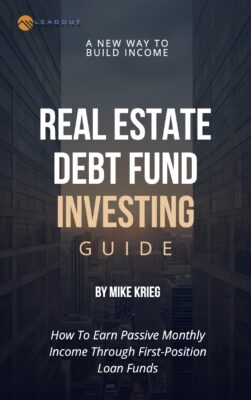
ALT TEXT: Real Estate Debt Fund Investor’s Guide cover showing how first-position lending creates monthly passive income for accredited investors
First-Position Security: Your Margin of Safety
One of the most important concepts in value investing comes from Benjamin Graham, the father of modern investing and mentor to Warren Buffett. Graham taught that successful investing requires a margin of safety. You never pay full value for an asset. You buy at a discount so that even if things go wrong, you are still protected.
The same principle applies in debt fund investing through first-position security.
When a debt fund makes a loan, it does not lend 100 percent of the property’s value. It lends conservatively, typically 50 to 70 percent of the property’s after-repair value. That means there is a built-in equity cushion of 30 to 50 percent protecting your capital.
Let me give you an example. Suppose a borrower buys a distressed property for $100,000 and budgets $50,000 for renovations. The after-repair value is projected at $200,000. A debt fund might lend $120,000, which is 60 percent of the ARV.
Even if the market softens and the property only sells for $160,000 instead of $200,000, the fund is still fully covered. The borrower takes the loss on their equity, not the lender.
This conservative loan-to-value ratio is your margin of safety. It protects you from market fluctuations, cost overruns, and borrower mistakes.
But the protection goes even deeper. The fund records a first-position lien on the property. This lien is filed with the county and backed by title insurance. It means that if the borrower defaults, the fund has the legal right to foreclose and take ownership of the property. The fund is first in line ahead of any other creditors, contractors, or junior lenders.
In Proverbs 21:5, we read, “The plans of the diligent lead surely to abundance, but everyone who is hasty comes only to poverty.” First-position lending is the diligent path. It is not gambling on upside. It is building wealth on a foundation of protection and prudence.
This is not to say there is no risk. Every investment carries risk. Borrowers can default. Markets can shift. Properties can take longer to sell than expected. But the margin of safety provided by conservative lending and first-position liens significantly reduces your downside exposure.
For me, this aligns perfectly with biblical stewardship. I am not being reckless with what God has entrusted to me. I am protecting capital while still putting it to productive use.
Types of Debt Fund Strategies
Not all debt funds are the same. Understanding the different strategies will help you evaluate which type aligns with your goals and risk tolerance.
Senior Secured Lending (First-Position). This is the most conservative debt strategy. The fund makes loans secured by first-position liens on real estate. These loans are typically short-term, six months to two years, and are used for fix-and-flip projects, bridge financing, or new construction. Because the loans are secured and senior, they offer lower risk but also more modest returns, typically in the range of 8 to 11 percent annually.
This is the strategy LeadOut focuses on. We believe in capital preservation first, income second, and growth third.
Mezzanine or Subordinate Debt. Mezzanine debt sits between senior debt and equity in the capital stack. It is junior to first-position lenders, which means it carries more risk. In exchange for that added risk, mezzanine lenders earn higher returns, often 12 to 15 percent or more. If a project fails, mezzanine lenders get paid only after senior debt is satisfied.
This strategy can work for investors with higher risk tolerance and longer time horizons, but it is not for everyone.
Preferred Equity (Debt for Tax Purposes). Some funds invest in preferred equity, which is technically an ownership position but structured like debt for tax purposes. Preferred equity investors receive a fixed preferred return before common equity holders get paid. This strategy offers higher yields but comes with equity-like risks.
Direct Lending vs. Fund Participation. You can lend directly to individual borrowers or invest in a fund that diversifies across many loans. Direct lending offers potentially higher returns and more control, but it concentrates your risk in a single loan. Fund participation spreads risk across dozens of loans and requires far less time and expertise.
For most investors, especially those seeking true passive income, fund participation is the smarter choice. You get diversification, professional management, and consistent cash flow without the headaches of sourcing, underwriting, and servicing loans yourself.
The key is to understand what you are investing in. Read the Private Placement Memorandum. Ask questions. Know where your capital is going, what the loan-to-value ratios are, and how the fund manages risk.
Debt Funds vs. Equity Investing: A Deep Comparison
One of the most common questions I get is this: Should I invest in debt funds or equity syndications?
The answer is not one-size-fits-all. It depends on your goals, risk tolerance, and season of life. Let me break down the key differences so you can make an informed decision.
Risk Profile. Debt investors are lenders. Equity investors are owners. Lenders get paid first. Owners get paid last. If a project underperforms, debt investors still receive their interest and principal (assuming the loan is properly secured). Equity investors absorb the losses.
This means debt investing is generally lower risk. You are not betting on the property appreciating or the deal sponsor executing perfectly. You simply need the collateral value to cover your loan.
Return Profile. Lower risk typically means lower returns. Debt funds often target 8 to 11 percent annual returns. Equity syndications might target 15 to 20 percent or higher, especially if the project involves significant value-add work.
But remember, equity returns are projected, not guaranteed. Debt returns are more predictable because they are based on contractual interest payments.
Cash Flow Timing. Debt funds usually pay monthly or quarterly distributions from the interest income they collect. This creates steady, predictable cash flow from day one.
Equity syndications typically hold properties for five to seven years, with cash flow distributed quarterly or annually. Most of the return comes at the end when the property sells. This is great if you are reinvesting and building long-term wealth, but it does not help if you need monthly income today.
Time Commitment. Both debt and equity can be passive, but debt funds tend to be more hands-off. You invest, receive distributions, and review quarterly reports. Equity syndications may involve more communication, capital calls, and investor updates.
Volatility. Debt funds are less volatile because they are not tied to property appreciation. A debt fund’s value is based on the underlying loan portfolio, which remains relatively stable. Equity values fluctuate with market conditions, property performance, and exit timing.
Which Should You Choose? If you prioritize capital preservation, consistent monthly income, and lower risk, debt funds are likely a better fit. If you are willing to take more risk for higher potential returns, can wait five to seven years for liquidity, and do not need monthly cash flow, equity might be more appealing.
Many sophisticated investors do both. They allocate some capital to debt for stability and income, and some to equity for growth and upside.
For me, at this season of life with family and ministry commitments, debt funds align better. I value the monthly income, the capital protection, and the time freedom. But I know investors who thrive with equity deals, and I respect that path too.
The important thing is to know yourself, know your goals, and invest accordingly.
The Power of Monthly Compounding Returns
Let me show you what happens when you invest $100,000 in a debt fund earning 9 percent annually with monthly compounding.
Year 1: $109,381
Year 2: $119,668
Year 3: $130,909
Year 5: $156,568
Year 10: $245,219
Year 20: $601,444
You more than double your money in 10 years. You multiply it by six in 20 years. And this assumes you simply reinvest the monthly distributions and let compounding do the work.
This is the power of consistent, compounding returns. It is not flashy. It is not exciting. But it is the proven path to wealth.
Proverbs 13:11 says, “Wealth gained hastily will dwindle, but whoever gathers little by little will increase it.” Monthly compounding is the embodiment of this principle. You gather little by little, month after month, year after year, and the result is abundance.
Now imagine if, in addition to reinvesting, you also add $1,000 per month from your income. After 10 years, you would have over $350,000. After 20 years, over $1.1 million.
But here is what excites me even more. Monthly distributions give you the flexibility to be generous consistently. Instead of waiting for a big lump sum payout in five years, you receive income every single month. You can tithe from it. Give to missions. Support a family in need. Fund a ministry project.
Second Corinthians 9:6-8 says, “Whoever sows sparingly will also reap sparingly, and whoever sows bountifully will also reap bountifully. Each one must give as he has decided in his heart, not reluctantly or under compulsion, for God loves a cheerful giver. And God is able to make all grace abound to you, so that having all sufficiency in all things at all times, you may abound in every good work.”
Debt fund investing allows you to sow bountifully and consistently. The monthly cash flow creates the capacity to be generous not just once, but month after month after month. That, to me, is Kingdom-minded wealth building.
See more examples of how compounding works in different scenarios. Get the free Real Estate Debt Fund Investor’s Guide here.
Real Estate Debt Funds vs. REITs vs. Syndications
If you are exploring passive real estate investing, you have probably come across three main options: debt funds, REITs, and syndications. Let me briefly compare them so you understand where each fits.
Real Estate Debt Funds. You lend to real estate projects. First-position security. Monthly income. Capital preservation focus. Typically 8 to 11 percent returns. Quarterly liquidity (with notice). Minimum investment $25,000 to $100,000. Accredited investors only.
REITs (Real Estate Investment Trusts). You own shares in a company that owns properties. Publicly traded (daily liquidity). Dividend income (quarterly). More volatile, tied to stock market. Returns vary widely. No accredited investor requirement. Can invest with as little as a few hundred dollars.
Equity Syndications. You own a fractional piece of a specific property. Five to seven year hold period. Cash flow quarterly or annually. Most returns at exit. Typically 15 to 20 percent projected returns. Minimum investment $25,000 to $100,000. Accredited investors only.
Which Is Best? It depends on your goals.
Want daily liquidity and don’t mind stock market volatility? REITs.
Want maximum upside and can wait five to seven years? Equity syndications.
Want monthly income, first-position security, and quarterly liquidity? Debt funds.
You can also combine strategies. Many investors hold REITs for liquidity, debt funds for income, and syndications for growth. Diversification across strategies can smooth out your overall returns and reduce risk.
The key is to match the investment vehicle to your objectives, time horizon, and risk tolerance.
Benefits and Risks: What You Need to Know
Let me be completely transparent about both the benefits and the risks of debt fund investing.
Benefits:
Consistent Monthly Income. You receive distributions every month, creating predictable cash flow. This is ideal for retirees, those seeking passive income, or anyone who wants consistent returns.
First-Position Security. Your capital is protected by first liens on real property. You are first in line to be repaid, ahead of equity holders and junior creditors.
Capital Preservation Focus. Debt funds prioritize protecting your principal. The goal is steady income, not speculative appreciation.
Passive Management. Fund managers handle everything. Sourcing loans, underwriting, servicing, collections, foreclosures if needed. You simply invest and receive distributions.
Diversification. Your capital is spread across many loans, borrowers, and properties. This reduces the impact of any single default.
Professional Expertise. Experienced underwriters and asset managers run the fund. They have systems, relationships, and expertise you would not have as an individual lender.
Lower Volatility. Debt funds are not tied to stock market fluctuations or property value swings. Returns are based on contractual interest payments.
Quarterly Liquidity (in Many Funds). Unlike equity syndications with five to seven year lock-ups, many debt funds offer quarterly redemption with 90 days notice. This gives you access to capital if your circumstances change.
Risks:
Credit Risk. Borrowers can default. While first-position liens provide protection, defaults still require time and effort to resolve. Foreclosures can take months.
Market Risk. If property values decline significantly, the collateral backing your loan may not fully cover the outstanding balance. This is mitigated by conservative loan-to-value ratios, but it is still a risk.
Liquidity Risk. Even with quarterly redemption, you cannot access your capital instantly like you can with a stock. If you need liquidity tomorrow, debt funds are not the right vehicle.
Interest Rate Risk. If interest rates rise, the fixed returns from existing loans may become less attractive relative to new opportunities. However, many debt funds use floating-rate loans pegged to benchmarks like SOFR, which helps protect against rising rates.
Concentration Risk. If a fund focuses heavily on one geographic market or property type, a downturn in that market can impact the entire portfolio. Diversification across markets and loan types reduces this risk.
Manager Risk. The quality of the fund manager matters immensely. Poor underwriting, inadequate due diligence, or mismanagement can lead to higher default rates and lower returns. This is why vetting the fund sponsor is critical.
I share these risks not to scare you, but to equip you. Every investment carries risk. The question is whether the risks are managed well and whether the potential rewards justify those risks.
For me, the combination of first-position security, diversification, professional management, and monthly income makes debt fund investing one of the most prudent ways to generate passive real estate returns.
Who Should (and Shouldn’t) Invest in Debt Funds
Debt fund investing is not for everyone. Let me help you determine if it is a fit for your situation.
You Should Consider Debt Funds If:
You are an accredited investor (more on this below).
You prioritize capital preservation and steady income over maximum growth.
You want passive real estate exposure without landlording.
You do not need daily liquidity and can commit capital for at least one to two years.
You value monthly distributions and the ability to reinvest or spend them.
You are a busy professional with limited time for active investing.
You want first-position security and downside protection.
You appreciate professional management and systems.
You Should Skip Debt Funds If:
You need daily liquidity or may need to access capital within a few months.
You want maximum upside potential and are willing to take equity risk.
You do not qualify as an accredited investor (yet).
You have a very short time horizon (under one year).
You prefer active involvement and hands-on control over your investments.
You are unwilling to accept any level of illiquidity.
What Is an Accredited Investor? The SEC defines an accredited investor as someone who meets one of these criteria:
Individual income over $200,000 per year (or $300,000 jointly with spouse) for the past two years with expectation of the same going forward.
Net worth over $1 million (excluding primary residence).
Certain professional certifications (Series 7, Series 65, etc.).
If you do not yet meet these thresholds, that is okay. Focus on building your income and net worth through your business, career, and other investments. When you reach accredited status, debt funds will still be here.
The key is to be honest about your goals, your financial situation, and your season of life. Debt funds are a powerful tool, but only when used at the right time and for the right reasons.
If this describes you, our free Debt Fund Investor’s Guide walks through the complete evaluation process step-by-step. Download it here.
How to Evaluate Faith-Based Debt Fund Opportunities
Not all debt funds are created equal. If you are seeking a faith-based investment that aligns with your values, here are the critical questions to ask before committing capital.
Track Record. How long has the fund been operating? What is their historical default rate? What have actual investor returns been (not just projections)? Ask for audited financials and third-party performance data.
Loan Diversification. How many loans are in the portfolio? Are they spread across multiple markets and property types, or concentrated in one area? Diversification reduces risk.
Loan-to-Value Ratios. What is the average LTV across the portfolio? Conservative funds stay at or below 70 percent LTV. If you see funds lending at 80 or 90 percent, that is a red flag.
Geographic Focus. Is the fund investing in strong, growing markets or declining areas? Market selection matters. Austin, for example, has been one of the strongest real estate markets in the country for years. That is not an accident.
Redemption Terms. Can you redeem quarterly, annually, or are you locked in for a set term? What is the notice period? Understanding liquidity terms is essential.
Fee Structure. What are the management fees? Are there performance fees? Are fees reasonable and transparent, or are they buried in fine print? A typical structure might be 1 to 2 percent annual management fee with no performance fee on debt funds.
Faith Integration. How does the fund actually integrate faith? Is it just marketing, or is there genuine alignment? Do they pray over investment decisions? Do they give a portion of profits to ministry? Do they treat borrowers with integrity and grace?
Values Alignment. Are you comfortable with the types of projects being financed? Some funds lend to fix-and-flip investors improving distressed homes. Others might finance new construction or commercial properties. Make sure the fund’s focus aligns with your values.
Communication and Transparency. How often does the fund report to investors? Are updates detailed and honest, or vague and overly optimistic? Transparency is a sign of integrity.
Red Flags to Watch For: Guaranteed returns (nothing is guaranteed). Pressure to invest quickly. Reluctance to answer questions. Lack of third-party audits. Overly complex fee structures. No track record. Promises that sound too good to be true.
First Thessalonians 5:21 says, “But test everything; hold fast what is good.” Do not skip due diligence just because someone claims to be a Christian investor or fund manager. Test everything. Ask hard questions. Verify track records. Pray for wisdom.
God calls us to be wise stewards, not naive. A faith-based investment should pass both the financial test and the values test.
Getting Started: Your Path to Debt Fund Investing
If debt fund investing sounds like a fit for your goals, here is a simple roadmap to get started.
Step 1: Verify You Are an Accredited Investor. Review the SEC criteria. If you meet the income or net worth thresholds, you are ready. If not, focus on building wealth until you qualify.
Step 2: Determine Your Investment Goals. What are you trying to accomplish? Monthly income? Capital preservation? Diversification? Long-term compounding? Be clear on your objectives so you can evaluate opportunities accordingly.
Step 3: Research Fund Options. Look for funds with strong track records, conservative underwriting, first-position focus, and values alignment. LeadOut Invest is one option, but there are others. Do your homework.
Step 4: Review the Private Placement Memorandum. The PPM is the legal document that outlines the fund’s strategy, risks, fees, and terms. Read it carefully. If you do not understand something, ask questions or consult an attorney.
Step 5: Start with a Comfortable Amount. You do not have to invest your entire net worth on day one. Start with an amount you are comfortable with, see how the fund performs, and scale up over time as you gain confidence.
Step 6: Set Up Distributions. Decide whether you want to reinvest distributions for compounding or receive them as monthly income. Many funds offer both options. You can always change your election later.
Step 7: Monitor and Review. Once invested, review quarterly reports. Track your distributions. Stay informed about fund performance. A good fund will provide regular updates and transparent communication.
Step 8: Pray for Wisdom. James 1:5 says, “If any of you lacks wisdom, let him ask God, who gives generously to all without reproach, and it will be given him.” Invite God into your investment decisions. Seek His guidance. Trust that He will direct your steps.
If you want to learn more, I encourage you to download our free guide, The Real Estate Debt Fund Investor’s Guide. It goes deeper into how first-position lending works, how to evaluate funds, and how to build a wealth strategy that honors God.
You can also reach out to me directly. I am always happy to answer questions, share our fund’s track record, and help you determine if debt fund investing is right for your season.
Final Thoughts: Building Wealth to Build the Kingdom
Here is what I have learned over more than two decades of real estate investing. Wealth building is not the goal. It is the tool.
The goal is to be a faithful steward of what God has entrusted to you. To provide for your family. To be generous with those in need. To fund Kingdom work that advances the Gospel and blesses others.
Debt fund investing, when done with integrity and wisdom, can be a powerful tool in that process. It generates consistent monthly income. It protects capital. It frees up your time for what matters most. And it creates capacity to give generously and consistently.
First Timothy 6:17-19 says, “As for the rich in this present age, charge them not to be haughty, nor to set their hopes on the uncertainty of riches, but on God, who richly provides us with everything to enjoy. They are to do good, to be rich in good works, to be generous and ready to share, thus storing up treasure for themselves as a good foundation for the future, so that they may take hold of that which is truly life.”
Debt fund investing is not about getting rich for the sake of being rich. It is about being faithful with what you have been given so that you can be generous, do good, and store up treasure that truly matters.
My prayer is that this guide has equipped you to make a wise, informed decision about whether debt fund investing aligns with your goals and your calling.
If you are ready to take the next step, I invite you to download our Debt Fund Investor’s Guide or reach out to our team. We would be honored to walk with you on this journey.
