
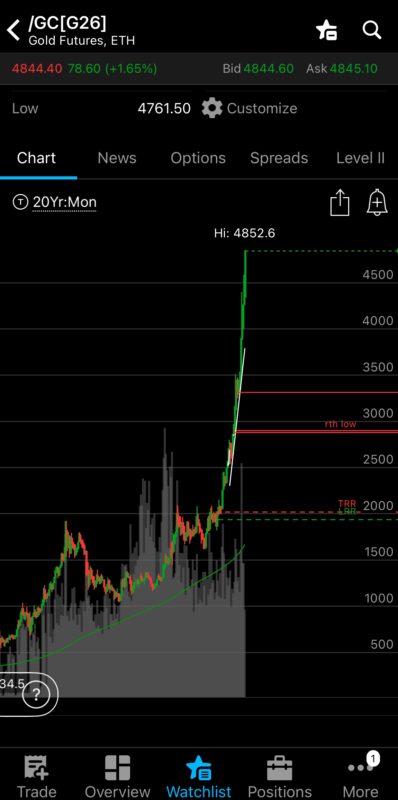
Take a good hard look at that Gold chart. That’s a parabolic move. Silver is doing the same thing. Now, I don’t know about you, but when I see an asset that I own do something like this, it’s time to take a little off. Back in 2010, when gold was trading around $850 per ounce, I made a decision that seemed radical to some of my friends. I took a significant portion of my savings and bought physical gold. The financial crisis was still fresh in everyone’s mind. Banks had failed. The stock market had crashed. Real estate had collapsed. And I wanted something tangible, something that couldn’t be printed by a central bank or manipulated by Wall Street.
Why I Bought Gold in the First Place (And Why You Probably Did Too)
Let me take you back to 2010. The world felt broken. We’d just watched the global financial system nearly collapse. Lehman Brothers had gone bankrupt. Bear Stearns had been fire-sold to JP Morgan. AIG required a massive government bailout. The phrase “too big to fail” had entered our vocabulary, and with it, a deep mistrust of the entire financial system.
I was in my early 30s, building my career, and watching my 401(k) statements arrive each month with increasingly depressing numbers. My retirement accounts had been cut in half during the crash. I had friends who’d lost their homes. The conventional wisdom about stocks for the long run, about diversification, about trusting the system felt naive and dangerous.
Gold represented something different. It had been money for 5,000 years. Empires had risen and fallen, currencies had come and gone, but gold remained. More importantly, gold was outside the system. No government could print more of it. No Federal Reserve could manipulate its supply. No bank could create digital entries and call it gold.
When I made that first purchase of physical gold coins and bars, I felt a sense of security I hadn’t felt since before the crisis. This was real. This was tangible. This was mine. And if everything went to hell again, at least I’d have something of real value that couldn’t disappear with a keystroke.
If you bought gold during that era, or anytime since, you probably had similar motivations. You wanted protection. Insurance against the unknown. A hedge against inflation, currency devaluation, or another financial crisis. Gold has always served that purpose throughout history, and it served it well for me.
The Problem Gold Solved: Wealth Preservation in Uncertain Times
Gold did exactly what I bought it to do. Through the European debt crisis, through multiple rounds of quantitative easing, through zero interest rate policy, through the pandemic and its aftermath, gold preserved my purchasing power. While currencies were debased and money was printed by the trillions, my gold held its value and then some.
The chart tells the story. From my purchase price around $850 to today’s $4,500+, gold has outperformed almost every major asset class over that 15-year period. It certainly crushed cash savings, which lost massive purchasing power to inflation. It beat bonds handily. It even kept pace with or exceeded stock market returns during various periods.
But more importantly than the price appreciation, gold provided something else: peace of mind. When the pandemic hit in 2020 and markets crashed 30% in a matter of weeks, my gold holdings didn’t panic-sell. When inflation roared back after years of dormancy, my gold didn’t lose purchasing power like dollars in a savings account.
This is what gold excels at. It’s insurance. It’s a store of value. It’s an asset that tends to move inversely to the dollar and to stock market fear. It’s a way to diversify away from paper assets and into something physical. For these purposes, gold remains unmatched.
The problem is that gold only solves one side of the wealth equation. It protects what you have. But it doesn’t grow what you have in a way that produces actual spendable income. And that distinction has become increasingly important to me as I’ve moved from wealth accumulation mode into a season where cash flow matters more than appreciation.
The Problem Gold Can’t Solve: Income Generation and Cash Flow
Here’s the uncomfortable truth about gold that the precious metals industry doesn’t like to advertise. Gold doesn’t produce anything and it doesn’t pay dividends. It just sits there. Hoping to appreciate. Hoping that the next buyer will pay more than you did.
When I was younger and working full time, earning a good income from my job, this didn’t really matter. My lifestyle was funded by my salary. My investments were for the future. Whether they generated income or just appreciated in value was somewhat academic. I had time to let things compound and grow.
But as I’ve gotten older, as I’ve started thinking about retirement, as I’ve watched my own father struggle with the transition from earning to spending, I’ve realized something fundamental. Eventually, we all need our assets to produce income we can actually spend. We need cash flow. We need money hitting our bank account on a regular basis that we can use to pay bills, fund our lifestyle, support our families, and yes, as a man of faith, fund the Kingdom work we’re called to do.

Gold can’t do that. I can’t clip a coupon from my gold bars. I can’t collect a dividend from my gold coins. The only way to access the value in my gold is to sell it. And selling means I’m trading my insurance policy for cash, which defeats the original purpose.
This creates a fundamental problem. If gold is my wealth preservation vehicle, my insurance against chaos, then I need to keep it. But if I need income, I have to sell it. These two goals are in direct conflict. You can’t have your gold bar and spend it too.
I started asking myself a different question. What if I could maintain some gold for protection, but shift a portion into assets that preserve capital AND generate monthly income? What if I could have both insurance and an income engine? What if there was a way to maintain downside protection while actually getting paid every single month?
What Warren Buffett Has Been Saying About Gold All Along
Warren Buffett has famously been skeptical of gold as an investment. He’s never been shy about his opinion. In his 2011 letter to Berkshire Hathaway shareholders, Buffett explained his view: “Gold has two significant shortcomings, being neither of much use nor procreative. True, gold has some industrial and decorative utility, but the demand for these purposes is both limited and incapable of soaking up new production. Meanwhile, if you own one ounce of gold for an eternity, you will still own one ounce at its end.”
For years, I dismissed Buffett’s criticism. After all, I’d watched my gold appreciate 5x while he was criticizing it. But I’ve come to realize that Buffett wasn’t wrong about gold. He just looks at investments through a different lens than most gold buyers. He’s focused on productive assets. Assets that produce something. Assets that compound over time not just through appreciation but through actual production of more wealth.
A farm produces crops year after year. A business produces profits year after year. A rental property produces rent month after month. These assets do something. They work for you. They produce income that can be reinvested or spent. Gold just sits there looking shiny.
Buffett also said something else about gold that’s worth considering. He called it “a way of going long on fear.” And he was right about that too. When I bought gold in 2010, I was buying fear. Fear of inflation. Fear of currency collapse. Fear of another financial crisis. That fear was justified at the time, and gold rewarded that fear with appreciation.
But I don’t want to be in the fear business forever. At some point, I want to be in the production business. I want assets that make money when times are good, not just when times are bad. I want to build wealth, not just preserve it. And for that, I need productive assets that generate income.
The Stewardship Question: What Do You Do With a 5X Gain?
As a Christian, I can’t discuss wealth building without discussing stewardship. The Parable of the Talents in Matthew 25 makes it clear that we’re expected to do something productive with the resources God entrusts to us. The servant who buried his talent in the ground was condemned, not praised for keeping it safe.
This parable has weighed on me more heavily as my gold has appreciated. Yes, I preserved wealth. Yes, I protected against inflation and currency debasement. But did I really multiply what was entrusted to me? Or did I just bury it in a modern form of the ground, a safe deposit box, where it couldn’t be lost but also couldn’t produce fruit?
The servant who turned five talents into ten wasn’t praised for protecting the original five. He was praised for doubling them. He was praised for taking what he was given and making it productive. He was commended for his faithfulness in using resources to create more resources.
When gold has appreciated 5x, good stewardship demands that we ask hard questions. Is it wise stewardship to hold an asset that’s appreciated massively but produces nothing going forward? Or is it wise stewardship to take some profits, lock in gains, and redeploy capital into assets that will actually produce ongoing returns?
I’m not suggesting that holding gold is bad stewardship. Protection and preservation are legitimate goals. But I am suggesting that holding ONLY non-productive assets when you have the opportunity to own productive assets might not be the best stewardship of the windfall gains God has allowed you to realize.
This isn’t about greed. It’s about productivity. It’s about ensuring that the resources we’ve been blessed with are working as hard as possible, not just for our benefit, but for the Kingdom work we’re called to support. As someone who’s spent years in missions work, I’ve seen firsthand how consistent monthly income enables consistent monthly giving. Lump sums from selling appreciated assets are nice. Monthly cash flow that funds monthly generosity is transformational.
Three Options for Gold Holders Right Now
If you’re holding gold that’s appreciated significantly, you essentially have three options. Each has different implications for your financial future.
Option 1: Hold Everything and Wait for Higher Prices
This is the default position for most gold holders. Wait it out. Gold is going to $5,000. Or $6,000. Or $10,000. The dollar is going to collapse. Inflation is coming back. Central banks will keep printing. Just hold and wait for the next leg up.
This might work. Gold could certainly go higher. Many respected analysts are predicting exactly that. But consider what you’re giving up while you wait. Every month you hold gold is another month of zero income. If you’re sitting on $100,000 in gold, that’s potentially $666 per month you’re not earning at an 8% annual yield. Over a year, that’s $8,000 in income you’ve foregone while waiting for gold to appreciate another 10% or 20%.
And here’s the thing about waiting for higher prices. Gold could also correct. It’s had multiple 20-30% corrections during its long-term uptrend. If you’re waiting for $6,000 and it drops back to $3,500, did you make the right choice? Or did you miss the opportunity to lock in massive gains and redeploy into income-producing assets?
Option 2: Sell Everything and Move to Income Assets
The opposite extreme is to sell all your gold, take your profits, and move entirely into income-producing investments. Given gold’s parabolic rise, this might seem tempting. Lock in a 5x gain. Move into assets yielding 8-10%. Start collecting monthly income immediately.
The problem with this approach is that you lose the very thing you bought gold for in the first place. Protection. Insurance. A hedge against the scenarios that could still unfold. If you sell all your gold at $4,500 and it runs to $8,000 because of a currency crisis or major geopolitical event, you’ll regret the decision to sell everything.
Gold still serves a purpose in a well-balanced portfolio. It’s still insurance against tail risk events. It’s still a non-correlated asset that tends to zig when stocks zag. Selling everything to chase yield could leave you exposed precisely when you most need the protection gold provides.
Option 3: Take Partial Profits and Diversify Into Income
This is the path I’ve chosen, and I believe it’s the most prudent approach for most gold holders in this environment. Keep a significant gold position as insurance and wealth preservation. But take some chips off the table and redeploy them into assets that generate actual monthly income.
For me, this means keeping about 30% of my precious metals position as insurance. This is still substantial. If gold continues higher, I participate. If we have a crisis, I still have protection. But I’m not sitting on a 100% non-income-producing portfolio waiting for Armageddon.
The other 70% is being systematically redeployed into income-producing assets. Not all at once, to avoid poorly timing a gold market top. But gradually, dollar-cost-averaging out of gold and into monthly cash flow. This gives me the best of both worlds. Protection AND production. Insurance AND income. Preservation AND monthly distributions that I can spend or reinvest.
Why Income Matters More Than Appreciation (Especially In Retirement)
When you’re young and working, appreciation is your friend. You want your assets to grow in value. You have time to let things compound. You don’t need the income because you’re earning a salary. Capital gains are taxed favorably. Everything points toward buy-and-hold appreciation strategies.
But this changes dramatically as you approach or enter retirement. Suddenly, you need your assets to produce income you can actually spend without depleting your principal. The 4% rule suggests you can safely withdraw 4% of your portfolio annually in retirement. But that requires either selling assets each year (risky) or owning assets that produce at least that much in income.
This is where gold completely fails the retirement income test. To generate income from gold, you must sell gold. Every ounce you sell reduces your holdings. If gold’s price drops after you sell, you’ve permanently reduced your wealth. If gold’s price rises after you sell, you’ve missed out on gains. Either way, you’re eating your seed corn.
Compare this to income-producing assets. A properly structured real estate debt fund might yield 8% annually in monthly distributions. That’s $8,000 per year on a $100,000 investment, paid monthly. You receive the income, but you still own the investment. Your principal isn’t being depleted. You’re not forced to sell during down markets. You’re not trying to time your liquidations. The income just arrives, month after month, regardless of market conditions.
This income can be spent on living expenses. Or it can be reinvested to compound your returns. Or it can fund the generosity and Kingdom work you’re called to. The flexibility is what matters. You’re not stuck hoping for appreciation. You’re not forced to sell to access value. You’re receiving actual cash flow that gives you options.
For retirees or near-retirees, this difference is everything. It’s the difference between anxiously watching gold prices every day, trying to decide when to sell, versus confidently knowing that $X will hit your account every single month regardless of what gold or stocks or any other asset is doing.
The Math: $100,000 in Gold vs. $100,000 in First-Position Lending
Let me show you the numbers that changed my thinking. Let’s say you have $100,000 in gold right now, purchased at much lower prices. We’ll compare two scenarios over the next 10 years.
Scenario 1: Hold Gold
You keep your $100,000 in gold. If gold appreciates at 5% annually (a reasonable long-term assumption), your gold will be worth approximately $163,000 in 10 years. That’s nice appreciation. But during those 10 years, you’ve received zero cash flow. Zero monthly income. To access any of that gain, you have to sell the gold, paying capital gains taxes on your profit.
Total ending value: $163,000
Total income received: $0
Total spendable cash over 10 years: $0 (unless you sell)
Scenario 2: First-Position Real Estate Debt Fund at 8% Annual Yield
You invest $100,000 in a professionally managed real estate debt fund yielding 8% annually, paid monthly. If you reinvest all distributions (compounding), your investment grows to $215,892 after 10 years. That’s 32% more than the gold scenario.
But here’s where it gets really interesting. What if you don’t reinvest the income? What if you take the monthly distributions and spend them or save them separately?
With $100,000 at 8% annual yield, you receive $8,000 per year in distributions. Over 10 years, that’s $80,000 in actual cash flow received while still maintaining your $100,000 principal (assuming the fund maintains value).
Total ending value: $100,000 (principal) + $80,000 (received income) = $180,000
Total income received: $80,000
Total spendable cash over 10 years: $80,000
Even without compounding, you have more total value than the gold scenario, PLUS you had $80,000 of spendable income along the way that you could use for living expenses, generosity, or saving in other vehicles. That’s the power of income-producing assets versus appreciation-only assets.
And if you did compound the distributions? You’d have $215,892 versus $163,000 from gold. That’s an extra $52,892, a 32% better outcome, from the same starting investment. This is why Buffett focuses on productive assets. This is why the Parable of the Talents emphasized multiplication. This is why income matters.
How First-Position Lending Works (And Why It’s Not Gold)
I’ve mentioned first-position real estate lending several times, so let me explain what this is and why it’s become my preferred income-producing alternative to holding gold.
In a first-position lending structure, you’re essentially acting as the bank. Real estate investors, developers, and fix-and-flip operators need short-term financing to purchase and renovate properties. Traditional banks are often too slow or don’t want to lend on properties that need work. This creates an opportunity for private lenders to step in and earn attractive interest rates.
Here’s how it works. A developer finds a property worth $200,000 after repairs, currently listed at $120,000. They need to buy it and put $30,000 into renovations. They approach a debt fund that lends them $105,000 (70% of the purchase price) at 10% annual interest for 12 months.
The loan is secured by a first-position lien on the property, recorded at the county level just like a traditional mortgage. If the borrower doesn’t pay, the lender can foreclose and take ownership of the property. But here’s the key: the loan is made at only 52.5% of the after-repair value ($105,000 loan on a $200,000 property). This massive equity cushion provides downside protection.
This is called the margin of safety, a principle Benjamin Graham taught Warren Buffett. By lending well below the property’s value, you have significant protection even if something goes wrong. If the borrower defaults and you have to foreclose, you own a $200,000 property for $105,000. You can sell it at a discount and still make money.
Now, individual investors can’t efficiently do this on their own. Originating loans, doing due diligence, managing servicing, handling defaults – it’s a full-time job requiring expertise. This is where professionally managed debt funds come in. They pool money from multiple investors, originate and service loans, handle all the details, and distribute the interest income monthly to investors.
The fund provides diversification across many loans, professional management, consistent monthly distributions, and that crucial first-position security on every loan. It’s not gold. It’s not passive ownership of real estate. It’s being the bank, earning the bank’s return, with collateral protection that provides downside security.
Trading Gold Bars for Monthly Cash Flow: My Personal Strategy
Here’s what I’m actually doing with my gold holdings, shared transparently so you can consider whether something similar makes sense for your situation.
I started with a substantial position in physical gold and silver accumulated over 15 years. My cost basis ranged from $850-$1,800 per ounce for gold, depending on when I made each purchase. With gold now over $4,500, I’m sitting on significant unrealized gains.
My plan is straightforward. I’m keeping 30% of my precious metals as permanent insurance. This stays in the safe deposit box regardless of price. If gold goes to $10,000, great. If it drops to $2,000, I don’t care because this isn’t my income engine. This is insurance against scenarios I hope never happen but want to be prepared for if they do.
The other 70% I’m systematically converting to income-producing assets over 12-18 months. Not all at once, because I don’t want to pick a top. Not too slowly, because every month I wait is another month without income. I’m selling roughly 5-6% of my gold position each quarter, locking in gains, paying the capital gains taxes (which are much lower than ordinary income taxes), and redeploying into monthly income streams.
Specifically, I’m moving this capital into first-position real estate lending through professionally managed debt funds. Why? Because this asset class provides several things I value:
First, monthly distributions. The income hits my account every month like clockwork. I can spend it, reinvest it, or save it. But it’s there, consistently, regardless of gold’s price or stock market volatility.
Second, collateral security. Every dollar is backed by a first-position lien on real property, typically at 60-70% loan-to-value ratios. If a borrower defaults, the fund forecloses and recovers capital from the property sale. This isn’t a perfect guarantee, but it provides tangible downside protection similar to gold’s role as a hard asset.
Third, low correlation to stocks. Real estate debt performs based on loan performance, not stock market sentiment. This provides diversification similar to what gold offers, but with the added benefit of monthly income.
Fourth, the ability to compound or spend. If I don’t need the income now, I can reinvest distributions and let returns compound. If I do need income, I can take the distributions and use them. Gold doesn’t offer this flexibility. It’s all or nothing, sell or hold.
The Margin of Safety Principle: Gold Has It, But So Does This
One reason I loved gold was the inherent margin of safety. Gold has intrinsic value. It’s been money for millennia. There’s a floor under the price based on thousands of years of human psychology and demand. Even if gold crashes, it doesn’t go to zero. You own something real, something tangible, something with fundamental value.
This margin of safety concept comes from Benjamin Graham, who taught Warren Buffett to always invest with a cushion of protection. Don’t pay full price for anything. Don’t assume everything will go perfectly. Build in protection against the downside. Make sure that even if you’re wrong about the upside, you’re protected on the downside.
When I researched first-position lending as an alternative to gold, the margin of safety principle was crucial. I needed to know that this wasn’t just chasing yield. I needed downside protection, not just upside potential.
Here’s what I found. First-position lending, when done correctly with conservative loan-to-value ratios, has a built-in margin of safety similar to gold. If a loan is made at 65% LTV on a $200,000 property, that’s a $130,000 loan. For the lender to lose money, the property would have to lose more than 35% of its value AND the borrower would have to default. That’s two things that have to go wrong simultaneously.
Even during the 2008 financial crisis, the worst housing crash in modern history, properties that were truly worth $200,000 before the crash typically didn’t fall below $130,000. Some markets were worse than others, but a 35%+ decline required either gross overvaluation to begin with or truly catastrophic local economic conditions.
And here’s the thing about foreclosure and property ownership. If a borrower defaults and you foreclose, you own the property. You can sell it at a discount and still recover your principal. You’re not hoping for appreciation like a stock investor. You’re not trusting management like an equity investor. You own a tangible, hard asset (the property) that has value regardless of sentiment or market conditions.
This sounds familiar, right? It’s the same appeal as gold. Something real. Something tangible. Something with intrinsic value that doesn’t depend on central banks or government policy or Wall Street manipulation. But unlike gold, this tangible asset is also producing monthly income while you own it.
The margin of safety is there. The hard asset backing is there. The downside protection is there. But you’re also getting paid to hold it, which gold never does.
A Faith-Based Perspective: Stewardship, Income, and Kingdom Work
I can’t write about this transition without addressing it from a faith perspective. As Christians, everything we own is ultimately God’s. We’re stewards, not owners. This truth should shape how we think about investing, especially when we’ve been blessed with significant gains.
The Parable of the Talents teaches us that God expects us to be productive with what He’s entrusted to us. The servant who buried his talent was rebuked. Why? Because he took something valuable and made it unproductive. He prioritized safety over productivity. He chose preservation over multiplication.
This doesn’t mean we should be reckless. The other servants in the parable didn’t gamble their talents away. They invested wisely and prudently. But they made their master’s money work. They put it into productive use. They earned returns that pleased the master.
When I think about my gold holdings in this light, I have to ask: am I being a faithful steward? I preserved value, which is good. But did I multiply it in a way that serves God’s purposes? Can I use these appreciation gains to further Kingdom work?
Here’s where monthly income becomes powerful from a Kingdom perspective. When you own income-producing assets, you can establish consistent giving patterns. You can commit to supporting missionaries, funding ministries, helping the poor, and advancing the Gospel not just with occasional lump sums but with predictable, sustainable support.
Paul wrote in 2 Corinthians 9, “Whoever sows sparingly will also reap sparingly, and whoever sows generously will also reap generously. Each of you should give what you have decided in your heart to give, not reluctantly or under compulsion, for God loves a cheerful giver.”
Generous, cheerful giving is much easier when you have consistent monthly income. It’s hard to be generous when all your wealth is tied up in non-income-producing assets. You can sell and give, but then your wealth is depleted. With income-producing assets, you can give from the income while maintaining the principal. You can be generous month after month, year after year, without depleting what God has entrusted to you.
This is part of why I’m making this transition. Not just for my own financial benefit, though that’s certainly a factor. But because I want my wealth to be productive for Kingdom purposes. I want to support the work God is doing through missionaries, churches, and ministries not just when I feel like I can afford to give, but consistently, sustainably, from predictable income streams.
Your Next Move: Taking Profits Isn’t Giving Up on Gold
If you’re sitting on gold that’s appreciated significantly, you might be wrestling with the same questions I wrestled with. When do I sell? How much do I sell? Am I making a mistake if gold keeps climbing? Am I making a mistake if I don’t lock in these gains?
Let me offer some perspective from someone who’s been through this decision process. Taking profits is not giving up on gold. It’s not abandoning the thesis that led you to buy gold in the first place. It’s recognizing that gold served its purpose magnificently, and now it’s time to redeploy some of those gains into assets that serve a different purpose equally well.
Gold protected you. It preserved your wealth through uncertainty and crisis. It rewarded your foresight with significant gains. Now the question is: what’s the best use of those gains going forward?
You can hold everything and hope for higher prices. That might work. Gold could certainly run higher. But every month you hold is another month of zero income. Every year you wait is another year of returns you didn’t earn because you were sitting in a non-productive asset.
Or you can do what I’m doing. Keep a substantial gold position as insurance. Take partial profits systematically. Redeploy those profits into income-producing assets that generate monthly cash flow while maintaining downside protection through first-position security and margin of safety principles.
This isn’t all or nothing. You don’t have to sell all your gold and buy all income assets. You can have both. Protection AND production. Insurance AND income. Gold that preserves your wealth AND assets that produce monthly distributions you can spend or reinvest.
The key is recognizing that different assets serve different purposes. Gold is unmatched as insurance and wealth preservation. Income-producing assets are unmatched at generating the monthly cash flow you’ll eventually need. A wise portfolio contains both, weighted according to your stage of life and income needs.
For me, at this stage, that means less insurance and more income. Less preservation and more production. Less hoping for appreciation and more collecting monthly distributions. Not because I’ve lost faith in gold, but because I’ve gained understanding about what builds sustainable wealth over the long term.
Ready to Explore Income Alternatives?
If this article resonates with you, if you’re sitting on appreciated gold holdings and wondering about next steps, I encourage you to take action. Not rash action. Not emotional action. But thoughtful, prayerful action based on sound financial principles and Kingdom stewardship.
Start by educating yourself about income-producing alternatives. Read about first-position real estate lending. Understand how debt funds work. Learn about the margin of safety principle and how conservative underwriting protects capital.
Consider your own situation. How much of your portfolio is in non-income-producing assets like gold? How much monthly income do you need or want? What would predictable monthly cash flow enable you to do in terms of lifestyle, generosity, or Kingdom impact?
Pray about stewardship. Ask God to show you how He wants you to manage the resources He’s entrusted to you. Are you called to preserve everything in gold? Or are you called to redeploy some of those gains into productive assets that generate income for your needs and Kingdom purposes?
And when you’re ready, reach out. Schedule a conversation to discuss your specific situation, your goals, and how income-producing real estate debt investments might fit into your overall strategy. There’s no pressure, no sales pitch, just a straightforward discussion about what makes sense for your unique circumstances.
You spent years building your gold position. You made the right call at the right time. Now the question is: what’s the right call for the next season? Not what worked in the past, but what will work best going forward given where you are today and where you want to be tomorrow.
That’s the question I asked myself. That’s why I’m systematically trading gold bars for monthly cash flow. Not all at once. Not recklessly. But methodically, strategically, with a clear understanding that wealth preservation was yesterday’s priority and income production is today’s opportunity.
Gold did its job. It protected my wealth when I needed protection. Now I need income. And for that, I need assets that produce, not just assets that preserve. That’s the shift I’m making. And if you’re in a similar position with similar realizations, it might be the shift you should consider too.
