


For years, I wrestled with a question that many Christian investors face: Can I build wealth and improve my financial position through real estate while at the same time honoring my faith? Can I earn passive income and build a portfolio without compromising biblical principles? I believe the answer is yes, but it requires intentionality and a community to do it with. I’m grateful I’ve found a community of other like-minded investors who think the same way here in Austin.
Austin, Texas has become a hub for faith based real estate investing. That may be hard to imagine for those who have written us off as the capital of all things “weird”, but there are a lot of investors here who care about a lot more than the bottom line. The combination of a strong real estate market, a vibrant Christian community, and investors seeking to align their money with their values has created something special here. At LeadOut Invest, we are seeing more Christian investors asking the right questions about how to invest in ways that honor God and serve others.
I wanted to write on this topic in order to create a guide of sorts about faith based investing in Austin. I believe its in the places where the culture challenges your worldview the most, the strongest of faith truly reside. Austin is definitely such a place.
What is Faith Based Real Estate Investing?
It is my conviction that faith based real estate investing means applying Christian principles and biblical values to your investment decisions. It is not just about making money. It is about stewardship, community impact, and using your resources in ways that align with your beliefs.
The non faith-based approach to real estate investing focuses almost entirely on returns. Faith based isn’t satisfied with that and asks additional questions. How will this investment impact the community? Are we treating tenants with dignity? Are our management practices fair and just? Are we being good stewards of the capital entrusted to us?

The Bible has much to say about stewardship, lending, and building wealth. Proverbs 13:11 tells us that “wealth gained hastily will dwindle, but whoever gathers little by little will increase it.” This speaks directly to the patient, long-term approach required for successful real estate investing.
For Christian investors, faith based real estate means:
- Investing in properties with a Christ-like attitude to serve real housing needs, not just speculative ventures
- Treating tenants as image bearers of God deserving dignity and respect
- Operating with transparency and integrity in all dealings
- Seeking sustainable returns rather than maximum profit at any cost
- Using wealth building as a tool for generosity and kingdom impact
This approach does not mean accepting lower returns. In fact, many faith based investors find that operating with integrity and focusing on sustainable value creation leads to better long-term performance. It simply means that returns are not the only consideration.
Why Austin Texas is Ideal for Christian Real Estate Investors
Austin offers a unique combination of factors that make it attractive for investors. The city has experienced tremendous growth over the past decade, and that growth shows no signs of stopping.

The Austin metro area gained over 100,000 new residents in recent years. Major employers like Tesla, Oracle, and Apple have established significant operations here. This population and job growth creates sustained demand for housing across all price points.
But beyond the numbers, Austin has something else that matters to investors. The city has a strong Christian community with churches of all sizes and denominations. There are Christian business networks, ministries, and organizations throughout the metro area. This creates an ecosystem where investors can connect, collaborate, and support one another.
One of my favorite business networks in Austin is called The Toolbox. These are meetings that happen monthly at the Austin Country Club. Each month Christian businessmen meet to have lunch and listen to a speaker share about his business and faith journey. It is an incredible time of fellowship and inspiration.
Austin's real estate market offers opportunities at multiple scales. From single family homes to large multifamily apartment communities, investors can find properties that match their capital and experience level. The market is sophisticated enough to support professional management and operations while remaining accessible to investors who are just getting started.
Texas as a state offers additional advantages. There is no state income tax, which means more cash flow stays in your pocket. The landlord-tenant laws are generally favorable to property owners while still protecting tenant rights. The state's business-friendly environment supports real estate entrepreneurship.
For faith based investors specifically, Austin provides opportunities to make tangible community impact. Many neighborhoods need quality affordable housing. Workforce housing, which serves essential workers like teachers, nurses, and first responders, is in high demand. By investing in properties that serve these populations, Christian investors can earn solid returns while providing a genuine service to the community.
Two Faith Based Investment Strategies: Multifamily and Debt Funds
At LeadOut Invest, we focus on two primary investment strategies that work well for people who want to work with people who share their values and faith: multifamily syndication and debt fund investments. Both offer ways to earn monthly passive income, but knowing the value set of the managers is where the real value is. Investing is hard work so its really a plus knowing that we are working with men and women who have strong core principles.
Multifamily Syndication: Creating Community Impact in Texas
Multifamily syndication is when a group of investors pool their capital together to purchase an apartment community. The general partners (operators like LeadOut) find the property, negotiate the purchase, manage the renovation and operations, and handle all the day-to-day responsibilities. The limited partners (passive investors) provide capital and receive distributions from the cash flow and profits.
For Christian investors, multifamily investing offers several compelling advantages.
First, multifamily properties serve a real and essential need. Everyone needs a place to live. By investing in quality apartment communities, you are providing housing for families, young professionals, and individuals in your community. This is not speculation or hoping for price appreciation. You are owning assets that serve people every single day.
Second, multifamily investing allows you to have an impact on how properties are managed. When you invest with faith based operators, you can trust that tenants will be treated with respect and dignity. Maintenance requests get handled promptly. Properties are kept safe and clean. Residents are seen as people, not just rent checks. One example of this is Apartment Life, based here in Texas, and led by a personal friend of ours, Pete Kelly. This is a ministry that endeavors to improve the lives of residence in 700 apartment communities across the country. They are creating community in places where loneliness is epidemic. Partnering with Pete and his team is something that is unique to the Christian mode of apartment investing. We care about our tenants and earnestly desire to improve their lives.
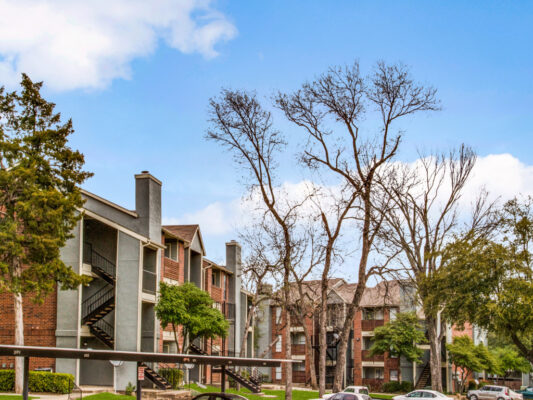
Third, looking now at the investment side of things, multifamily syndication offers economies of scale that smaller properties cannot match. A 100-unit apartment complex spreads expenses like management, maintenance, and financing across many units. This creates more stable cash flow and better risk-adjusted returns than owning a few single family rentals.
The typical multifamily syndication in Austin, or another Texas market might look like this:
A syndicator identifies a 150-unit apartment community in a growing Austin suburb. The property is dated but well-located near employment centers and good schools. The purchase price is $25 million. After analyzing the market, the syndicator determines that with renovations and improved management, the property can increase rents by 15-20% over three years.
The operating team raises $8 million from passive investors in minimum investments of $50,000 to $100,000. These investors become limited partners in the deal. The syndicator secures a loan for the remaining $17 million and closes on the property.
Over the next two years, the team renovates units as they turn over, improves the exterior and amenities, and implements better management systems. Monthly distributions go out to investors from the cash flow. After holding the property for five to seven years, the syndicator sells it at the improved value, returning capital plus profits to investors.
Throughout this process, the property provides quality housing for 150 families, partners with a group like Apartment Life to improve the community and develop a sense of belonging. The neighborhood benefits from a well-maintained property. And investors earn returns while knowing their capital created tangible value.
This is what faith based multifamily investing looks like in practice. In this model, everybody wins!
Debt Fund Investing: Passive Income Through Christian Lending Principles
Debt fund investing takes a different approach but shares similar values. Instead of owning equity in properties, debt fund investors provide loans to real estate projects. You become the lender rather than the owner.

For Christian investors, debt funds offer several advantages that align with biblical principles around lending and stewardship.
Debt funds typically provide first-position liens on properties. This means you have a secured interest in real estate. If something goes wrong with the project, your investment is protected by the collateral. This downside protection appeals to investors who prioritize capital preservation.
Debt funds also offer predictable monthly income. Unlike equity investments where distributions can vary, debt investments pay a fixed return. This makes financial planning easier and provides the kind of steady income stream that many investors need.
From a biblical perspective, lending has always been part of God's economy. The Bible has extensive guidance on fair lending practices. Deuteronomy 23:19-20 addresses interest on loans. Proverbs 22:7 acknowledges the lender-borrower relationship. Psalm 37:21 speaks to the importance of borrowers repaying their debts.
When structured properly with Christian principles, debt fund investing can be a way to help real estate projects get built while protecting your capital and earning steady returns. The key is ensuring that the lending practices are fair, the collateral is adequate, and the terms are reasonable for both parties.
A typical debt fund investment might work like this:
A debt fund raises capital from accredited investors with minimums of $25,000 to $100,000. This capital is then deployed as loans to real estate developers. These might be construction loans, bridge loans, or renovation loans for multifamily properties, commercial buildings, or residential developments.
Each loan is underwritten carefully. The fund ensures there is adequate collateral, verifies the borrower's ability to execute the project, and structures the loan terms to protect investors. The loans typically carry terms of 6 to 24 months with interest rates of 8-12%.
As borrowers make their monthly interest payments, those payments flow through to the debt fund investors as monthly distributions. When loans are repaid, that capital is redeployed into new loans. This creates a consistent stream of passive income for investors.

The downside protection of debt funds appeals to investors who take seriously their responsibility to be wise stewards. You are not hoping for maximum upside like with equity investments. You are accepting a more moderate but steady return in exchange for better protection of your principal.
These loans provide the liquidity needed to revitalize communities, reduce blight, and improve the standard of living of everyone.
Biblical Principles Applied to Real Estate Investment Decisions
Let me share some of the specific biblical principles we apply at LeadOut Invest when making real estate investment decisions.
Stewardship Over Ownership
First Corinthians 4:2 says "Moreover, it is required of stewards that they be found faithful." We do not see ourselves as owners of capital but as stewards. This shapes how we evaluate risk, how we treat tenants and borrowers, and how we think about returns.
Stewardship means taking reasonable risks, not reckless ones. It means being patient rather than chasing get-rich-quick schemes. It means thinking long-term about sustainable value creation.
Integrity in All Dealings
Proverbs 11:3 teaches that "The integrity of the upright guides them, but the crookedness of the treacherous destroys them." Real estate can be a complex business with many opportunities to cut corners or operate in gray areas.
Faith based, or value driven investing means committing to integrity even when it costs you. It means being transparent with investors about risks. It means honoring your commitments even when circumstances change. It means treating all parties fairly, from tenants to contractors to lenders.
Service to Others
Matthew 25:35-40 reminds us that serving others is serving Christ. When we provide quality housing, we serve families. When we create jobs through property management and maintenance, we serve workers. When we help investors build wealth, we serve their families and their ability to be generous.
Real estate investing should not be purely extractive. It should create value for all stakeholders.
Wisdom and Counsel
Proverbs 15:22 says "Without counsel plans fail, but with many advisers they succeed." Faith based investing means seeking wisdom, doing thorough due diligence, and not rushing into decisions.
It also means being part of a community of like-minded investors who can provide accountability, wisdom, and different perspectives.
Generosity as the Goal
Second Corinthians 9:11 speaks of being "enriched in every way to be generous in every way." Wealth building is not the end goal for Christian investors. It is a means to greater generosity, kingdom impact, and freedom to serve.
This perspective changes how you think about returns. You are not trying to maximize every dollar for consumption. You are building resources that can be deployed for good.
I've written and article about generosity at Storyline about a 2 day conference on generosity I participated in. It was an amazing experience that explored how we, as Christians are called to a life of generosity. It's called the Journey of Generosity.
The Difference Between Faith Based and Traditional Real Estate Investing
You might be wondering what actually differs between faith based real estate investing and traditional real estate investing. Let me be specific.
In traditional real estate investing, the decision-making framework is relatively simple. You analyze the numbers. You project the returns. You assess the risk. If the risk-adjusted return meets your threshold, you invest. Values and ethics might play a role, but they are secondary considerations.
Faith based investing adds additional filters to this process.
You still analyze the numbers. You still need good returns. But you also ask questions like:
- Does this investment align with my values and beliefs?
- How will this project impact the community?
- Are we treating all parties involved with dignity and fairness?
- Is this investment strategy honoring to God?
- What is the long-term sustainable value creation, not just short-term profit?
In practice, this might mean passing on investments that look good on paper but do not align with your values. It might mean investing in workforce housing with lower but more stable returns rather than luxury development with higher but less certain returns.
It might mean choosing operators based not just on track record but also on character and values alignment.
The difference is not that faith based investors do not care about returns. We absolutely do. But returns exist within a broader framework of stewardship, integrity, and kingdom impact.
Passive Income for Christian Investors: What to Expect
Let me be clear about what passive income means and what it does not mean in real estate investing.
Passive income means you are not actively involved in the day-to-day operations of the investment. You are not fixing toilets, showing apartments, or negotiating with contractors. That work is handled by professional operators.
However, passive does not mean hands-off or uninformed. As a limited partner in a syndication or an investor in a debt fund, you should still:
- Review quarterly reports and financial statements
- Stay informed about property or fund performance
- Ask questions when something is unclear
- Understand the business plan and strategy
- Maintain communication with the operators

For multifamily syndications, passive investors typically receive quarterly distributions from the property's cash flow. These distributions might range from 6-8% annually on your invested capital. When the property sells after the hold period of five to seven years, investors receive their initial capital back plus their share of the profits. Total returns over the life of the investment often target 15-20% annualized, though this is never guaranteed.
For debt funds, passive income is even more predictable. Monthly distributions are common, with annual returns typically in the 8-10% range. Since these are debt investments with first-position liens, the downside protection is stronger, though the upside potential is more limited compared to equity investments.
Both strategies allow Christian investors to build wealth over time through the power of compounding and reinvestment. The monthly or quarterly income can be reinvested into new opportunities, used to supplement your active income, or deployed toward generosity and giving.
The key is having realistic expectations. Real estate is not a get-rich-quick scheme. It is a patient, long-term approach to building wealth through tangible assets that serve real needs.
Questions to Ask Faith Based Real Estate Operators in Austin
If you are considering investing with a faith based real estate operator in Austin, here are the essential questions you should ask.
About Their Faith and Values
- How do your Christian values influence your investment decisions?
- Can you give specific examples of times when you made decisions based on faith principles rather than just maximizing profit?
- How do you treat tenants, contractors, and other stakeholders?
- What role does prayer and seeking God's guidance play in your business?
Do not just accept generic Christian language. Look for specific examples and evidence that faith actually shapes how they operate.
About Their Track Record
- How many deals have you completed?
- What were the actual returns on those deals compared to projections?
- Have you ever had a deal that did not perform as expected? What happened and what did you learn?
- Can you provide references from past investors?
Past performance does not guarantee future results, but a track record demonstrates experience and competence.
About This Specific Investment
- What is the business plan and investment thesis?
- What are the risks, and how are you mitigating them?
- What is the expected hold period and exit strategy?
- What are the fees and how is the operator compensated?
- What happens if things do not go according to plan?
Any operator who is not transparent about these questions is not someone you want to invest with.
About Communication and Reporting
- How often will you communicate with investors?
- What reporting will investors receive and how often?
- How can investors reach you if they have questions or concerns?
- What is your policy on difficult news or challenges that arise?
Consistent, transparent communication is essential in any investment relationship.
How to Get Started with Faith Based Investing in Austin
If you are a Christian investor interested in real estate opportunities in Austin, here is how to take the next steps.
Clarify Your Investment Goals
Start by getting clear on what you are trying to accomplish. Are you looking for monthly passive income? Long-term wealth building? Portfolio diversification? Kingdom impact? Most likely, it is a combination of these.
Write down your specific goals, your time horizon, and your risk tolerance. This clarity will guide your investment decisions.
Educate Yourself
Take time to understand both multifamily syndication and debt fund investing. Read articles, listen to podcasts, and talk to other investors. The more you understand, the better decisions you will make.
At LeadOut Invest, we offer educational resources specifically for faith based investors who want to understand these strategies.

Verify Your Accredited Investor Status
Most syndications and private funds are only open to accredited investors. The SEC defines this as individuals with $200,000 annual income ($300,000 for couples) or $1 million net worth excluding primary residence.
If you meet these thresholds, verify your status. If you do not yet meet them, focus on building your income and net worth until you do.
Connect with Operators
Reach out to other like-minded faith based real estate operators in Austin. Have conversations. Ask questions. Get to know them and their investment philosophy.
Look for operators who share your values, have a solid track record, communicate clearly, and demonstrate integrity.
Start with One Investment
Once you have done your research and found an operator you trust, start with a single investment. Experience is the best teacher. You will learn far more from actually investing than from reading about it. (We have a process we follow that you can learn more about on our investor education page: The Due Dilignece Checklist and the List of Key Real Estate Terms are great resources to help you get educated about investing in multifamily communities and other types of commercial opportunities.)
Document your decision-making process, track the investment's performance, and learn from the experience. This will inform your future investment decisions.
Build Your Portfolio Over Time
Real estate wealth building is a long-term game. As capital returns from your first investment, redeploy it into additional opportunities. Over time, you can build a diversified portfolio of faith based real estate investments that generates increasing passive income.
The key is starting. Many Christian investors spend years thinking about real estate investing but never actually take the first step. If you have been waiting for the perfect time or the perfect deal, let me tell you something: there is no perfect time. There are just good opportunities and people who take action on them.
Moving Forward with Faith and Action
Faith based real estate investing in Austin is not just a pipe dream. In such a liberal city, many wonder if any of us are here trying to apply our values. But it's true. We're here. And we want to make a difference. Christian investors are earning passive income, building wealth for their families, and creating positive community impact through all kinds of different investments like multifamily properties and debt fund investments.
At LeadOut Invest, we have built our business around helping believers invest in ways that align with their faith. We focus on two proven strategies: multifamily syndication in growing Austin markets and debt fund investments that provide first-position security with monthly income.
The question is not whether faith based real estate investing works. We think it certainly does. The question is whether you are ready to explore it for your own situation.
If you are an accredited investor who wants to learn more about current opportunities in Austin, we would love to have a conversation with you. No pressure, no sales pitch. Just a real conversation about your goals and whether our values and our faith-focused real estate investing approach might be a fit.
Real estate investing is a tool, nothing more. Like any tool, it can be used for good or ill. For Christian investors who approach it with the right heart, proper education, and wise stewardship, it can be a powerful way to build resources that serve your family, bless others, and advance the kingdom.
The Austin market offers unique opportunities right now for faith based investors. The combination of strong fundamentals, a vibrant Christian community, and specific strategies creates an environment where you can invest with both confidence and conviction.
The opportunities are here. The question is whether you are ready to take a step in this amazing city.
